Table of Content
It consists of greenish-gray, poorly bedded, pebbly siltstone and sandstone, with rounded dolomite boulders as a lot as 1 m. It formed in a deep-water depositional environment infilling a quickly inundated Hijam paleo-relief with intermittent gravity mass flow deposits and sedimentation from suspension. The photo to the left shows a well-formed set of cross beds.
It has a depositional setting with a shallow-marine shelf. Here you see large cross-beds with curved bases sandwiched between layers with roughly horizontal laminations.The current moved from right to left. Trough cross-bedding, well-visible on this outcrop with two, perpendicular walls. Foreset beds dip in direction of the person with the red hat on the background standing over a concave surface. Cross-bedding in fluvial sandstones with pebbles of the Chester Formation.
Dictionary Entries Close To Cross-bedding
They happen sometimes in granular sediments, particularly sandstone, and are indication of sediments deposited in deltas, sand dunes and glaciers. Cross-bedding can be subdivided based on the geometry of the sets and cross strata into subcategories. The mostly described varieties are tabular cross-bedding and trough cross-bedding. Tabular cross-bedding, or planar bedding consists of cross-bedded items that are giant horizontal clever with reverence to set thickness and which have primarily planar bounding surfaces.

DisclaimerAll content material on this web site, including dictionary, thesaurus, literature, geography, and different reference data is for informational functions solely. This data should not be thought-about complete, updated, and isn't intended to be used in place of a go to, session, or advice of a authorized, medical, or some other professional. The base is unconformable with the Mulussa Formation, and the top is unconformable with the overlying Mishrif or M'sad formations. Therefore, it's comparable to the Albian clastic facies in Saudi Arabian outcrops. Elsewhere to the south and southeast, the formation grades into the Nahr Umr Formation. •Mudcrack facies and assodated mudstones This uncommon facies reveals periodic exposure in between durations of deposition.
The Early Paleozoic Quiescent Phase In The Middle East: The Sauk Cycle And The Early A Part Of The Tippecanoe Cycle
The angle and course of cross-beds are generally pretty consistent. Individual cross-beds can range in thickness from only a few tens of centimeters, as a lot as lots of of ft or more depending upon the depositional setting and the scale of the bedform. Cross-bedding can type in any setting by which a fluid flows over a mattress with cell materials. It is commonest in stream deposits , tidal areas, and in aeolian dunes. Tabular cross-beds consist of cross-bedded models which have massive horizontal extent relative to set thickness and that have primarily planar bounding surfaces. The foreset laminae of tabular cross-beds have curved laminae that have a tangential relationship to the basal surface.
All the beds above are inclined in the same orientation. Therefore, we might say that the dominant winds within the space had been blowing from left to proper within the time interval witnessed by these layers. Lobes typically are constructed largely of this lithofacies, which is essentially the most widespread sedimentary facies in the study area. Sediments in channel branches commonly overlie this lithofacies.
In general, low velocity currents favor the formation of ripples with straight crests. On the other hand, sooner currents produce various forms of irregular ripples with sinuous to strongly curved crests. Cross-beds produced by bedforms with different form show different geometries. Straight crested-ripples produce planar cross-stratifications, characterized by inclined laminae separated by flat erosional surfaces, which could be tabular or wedge-shaped.

Cross-bedding is shaped by the downstream migration of bedforms such as ripples or dunes in a flowing fluid. The fluid flow causes sand grains to saltate up the stoss aspect of the bedform and acquire on the peak until the angle of repose is reached. At this point, the crest of granular material has grown too large and will be overcome by the force of the shifting water, falling down the lee facet of the dune. Repeated avalanches will eventually kind the sedimentary structure generally identified as cross-bedding, with the construction dipping within the path of the paleocurrent.
In geology, cross-bedding, also referred to as cross-stratification, is layering inside a stratum and at an angle to the main bedding plane. The sedimentary buildings which outcome are roughly horizontal models composed of inclined layers. The authentic depositional layering is tilted, such tilting not being the outcomes of post-depositional deformation. Cross-beds or "sets" are the teams of inclined layers, which are often identified as cross-strata.
Next the home stagers will work on removing the personal touches which might be distinctive to the present house owners. Paint colours may go from dramatic reds and purples to neutral tones like beige and taupe, so as to attraction to the lots. The house will doubtless be cleared of family photos, risqué artwork, collections and knickknacks, so potential buyers will be capable of higher envision their very own life in the home. In some cases furniture might be swapped out, and also you might not even acknowledge your own house. Some Gunzenhausen home stagers deal with most of those duties themselves, whereas others work with subcontractors and other professionals to get the job done.
Cross-bedding
It consists of poorly bedded shale and siltstone, and shaly to quartzitic sandstone with intense bioturbation. It has a depositional surroundings, with a lower-energy, shallow-marine shelf. Although the move path reverses regularly, the circulate patterns of flood on ebb currents generally do not coincide.
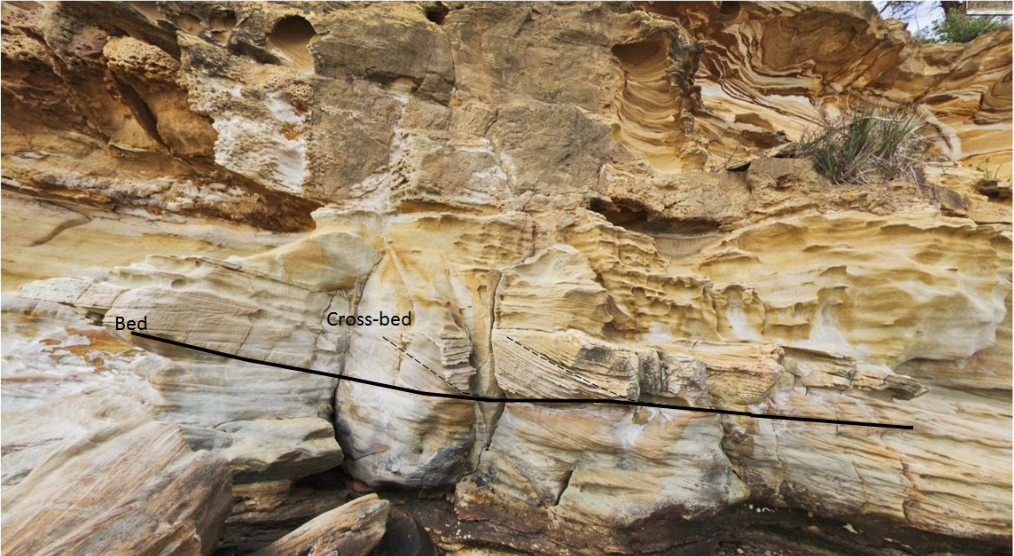
See the graphic under for an thought of how these cross-beds kind over time. Sedimentary rocks are usually deposited as horizonal layers. Even when folded or tilted by faulting the initially horizontal layering is obvious. Upon nearer examination, nonetheless, you might see very fantastic layers that are at an angle to the primary bedding.
Tabular cross-bedding is formed primarily by migration of large-scale, straight-crested ripples and dunes. Individual beds range in thickness from a couple of tens of centimeters to a meter or extra, however bed thickness down to 10 centimeters has been noticed. Where the set top is lower than 6 centimeters and the cross-stratification layers are only some millimeters thick, the term cross-lamination is used, somewhat than cross-bedding.
Studying trendy analogs allows geologists to draw conclusions about historical environments. Paleocurrent can be decided by seeing a cross-section of a set of cross-beds. However, to get a true reading, the axis of the beds have to be seen. It can also be tough to tell apart between the cross beds of a dune and the cross beds of an antidune.


No comments:
Post a Comment